
Posted by Stefan Hunter on Jan 12, 2026
How to Remove Sharpie From Bedding | DOWNLITE Blog
- Act fast and skip? heat:? Blot, dо not rub, and never put bedding іn the? dryer? until the Sharpie? stain іs? fully removed because heat can set the ink.
- Use the? Right remover for the fabric: Rubbing alcohol is the one? go-to for most bedding? while delicate fabrics like silk and wool need? extra caution and may require professional cleaning.
- Lift, then wash and recheck: Use the? towel? stack method tо pull ink out, pre-treat and wash per the care label, then air dry and repeat іf a faint shadow remains.
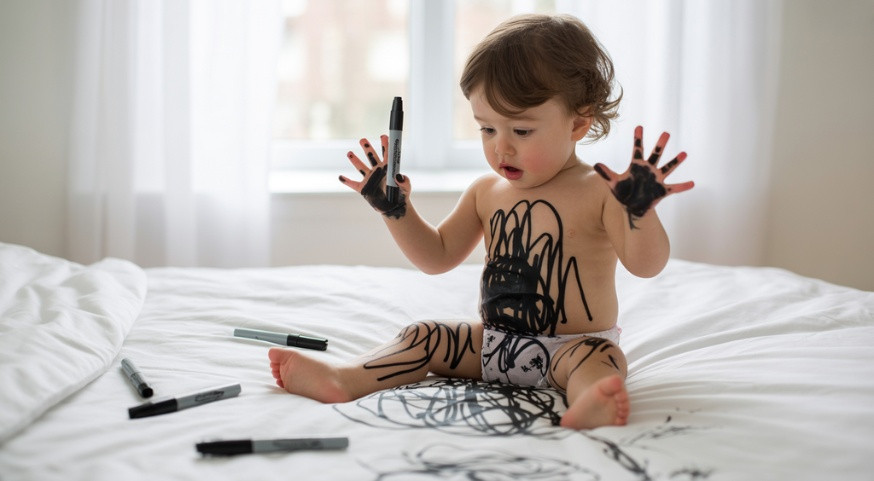
Sharpie and other permanent markers always seem to end up on the worst spots, like the kitchen counter or your bedding. The good news is that “permanent” doesn’t have to mean impossible. If you act quickly and use the right method, you can remove much of the ink from bedding and avoid common mistakes.
This guide will show you how to remove Sharpie from bedding, with tips for different fabrics, what to do if the stain has already dried, and which products and techniques are safe to use at home.
p.s. If you ever have this happen on your downlite bedding, give us a call and ask for the DOWNLITE Bedding ‘Oops program’, where we can get you a replacement at a substantial discount if the cleaning tips do not work well enough.
First, a few rules that prevent permanent damage
Before you touch the stain, keep these essentials in mind:
- Do not rub. Rubbing spreads the marker and pushes pigment deeper into fibers. Always blot.
- Do not use heat until the stain is gone. Dryer heat can set Sharpie into fabric, making it much harder to remove.
- Work from the back when possible. If you can reach the underside of the fabric, blotting from the back can push the ink out rather than drive it in.
- Test first on a hidden spot. Some finishes and dyes can react to solvents.
What you will need
Most Sharpie removal attempts succeed with a short list of supplies:
- Rubbing alcohol (isopropyl alcohol, 70% or 91%)
- White paper towels or clean white cloths
- Cotton balls or a soft sponge
- Liquid laundry detergent
- Stain remover (optional but helpful)
- Cold water
- Oxygen bleach (optional for whites and color-safe fabrics)
For certain fabrics, you may also consider acetone-based nail polish remover, but only with proper testing and caution.
Step-by-step: The universal Sharpie removal method
This method works for many bedding fabrics, especially cotton and cotton blends.
- Build a “towel stack” under the stain.
Slide a thick stack of paper towels under the stained area. This is crucial because it absorbs ink as it lifts, preventing it from migrating through the layers of bedding. If the item is filled and you can't reach the stain below, simply apply it on top. - Blot with rubbing alcohol.
Dampen a cotton ball or cloth with rubbing alcohol and blot the stain from the outside edge toward the center. You should see ink transfer into the towels underneath. - Replace the towels often.
As soon as the towels start looking inked, swap them for clean ones. Otherwise, the ink can re-deposit. - Rinse with cold water and blot dry.
Once you have lifted as much ink as possible, rinse the area with cold water. Blot again to remove moisture and any loosened pigment. - Pre-treat and wash.
Work a small amount of liquid detergent into the spot and let it sit for 10 to 15 minutes. Then wash according to the care label. - Air dry and inspect.
Do not put it in the dryer until you are sure the stain is fully removed. If a shadow remains, repeat the process.
The dryer gotcha: What if it’s already been dried?
If the stained bedding has already been in the dryer, you can still improve it, but it may take several tries. Heat can set the ink into the fabric, so you might need a stronger method:
- Start with rubbing alcohol blotting as described above.
- Follow with a soak in oxygen bleach (for whites and color-safe items). Oxygen bleach can help lift remaining stains over time without the harshness of chlorine bleach.
- Repeat, and air-dry between rounds so you can evaluate progress.
If the stain is really stubborn and the item is valuable, it may be best to take it to a professional cleaner.
Fabric-by-fabric advice (what works and what to avoid)
Cotton (sheets, duvet covers, pillowcases)
Cotton is usually one of the easiest fabrics to remove Sharpie from.
- Best first choice: rubbing alcohol blotting
- Next step, if needed: oxygen bleach soak (especially for white cotton)
- If stubborn, cautious use of acetone after a patch test
Avoid aggressive scrubbing, which can create fuzzing and hold ink.
Cotton blends (cotton polyester, percale blends)
Blended fabrics usually work well with the alcohol method, too, but be more careful with strong solvents.
- Best first choice: rubbing alcohol
- Soak option: oxygen bleach for light colors.
- Gotcha: polyester content can hold onto pigment more stubbornly than cotton
Polyester and microfiber
Polyester can be tricky since it doesn’t absorb water easily, but it can still hold onto ink.
- Best first choice: rubbing alcohol, slow and repeated
- Be careful with acetone: it can damage certain synthetics and finishes.
- Consider a stain remover designed for oils and pigments after alcohol treatment.
Linen
Linen is a lot like cotton, but it can change texture if you scrub it too much.
- Best: alcohol blotting, gentle handling
- Avoid: harsh rubbing or over-saturating the area.
Silk pillowcases
Silk is delicate and can get spots or lose its shine.
- Best approach: patch test and use minimal alcohol, gentle blotting
- If the label says dry clean only: treat lightly, then take to a professional
- Avoid acetone and heavy soaking.
Wool blankets
Wool is sensitive to heat, rough handling, and many cleaning products.
- Best: spot blot with alcohol only after patch testing
- Safer option: consult a professional cleaner for major stains
- Avoid hot water, heavy soaking, and harsh stain removers.
Down comforters and down alternative comforters
With these comforters, the challenge is not just the fabric cover but also making sure the filling doesn’t get wet.
- Focus on the shell stain only: use the towel stack method to avoid saturating the fill.
- Blot patiently and do smaller sections at a time.
- Wash only if the care label allows and dry thoroughly, because trapped moisture can cause odors or clumping.
If the shell fabric is cotton, you have a better chance of lifting the ink without damage.
Common mistakes that make Sharpie stains worse
- Using the dryer too soon. Heat sets stains.
- Rinse immediately with lots of water. This can cause ink to spread before it is lifted.
- Skipping the towel stack underneath. Without it, ink can migrate deeper or transfer to another area.
- Using chlorine bleach too early. Chlorine bleach does not reliably remove Sharpie and can weaken fibers or cause yellowing, especially on bedding.
- Mixing chemicals. Never combine bleach with other cleaners.
How to handle white bedding after the ink is mostly gone
If the stain is faint and you are working with white cotton or white blends, oxygen bleach is usually your best “finishing step.” A soak can help lift the last shadow without the risks of chlorine bleach.
If you are tempted to use chlorine bleach, use it carefully and only if the care label allows it, and only after most of the ink is already removed. Even then, oxygen bleach is often the safer option for bedding longevity.
When to call it and get help
If the bedding is high-end, made of a delicate fabric like silk, or the stain is large and heat-set, professional help may be a better option. You can still do the initial blotting to reduce the stain before taking it in, but avoid overworking the area.
Quick checklist: your best chance of success
- Blot, do not rub
- Use rubbing alcohol with a towel, and stack underneath.
- Rinse cold, pre-treat, wash per label.
- Air dry and inspect before any heat
- Use oxygen bleach to remove faint shadows.
Getting Sharpie out of bedding takes the right method and some patience, but you can often make stains much lighter or even remove them completely. The most important thing to remember is to keep the bedding out of the dryer until you’re sure the marker is gone.